
The Vibe-Coded Enterprise
Salesforce (CRM), Workday (WDAY), ServiceNow (NOW) & Atlassian (TEAM)

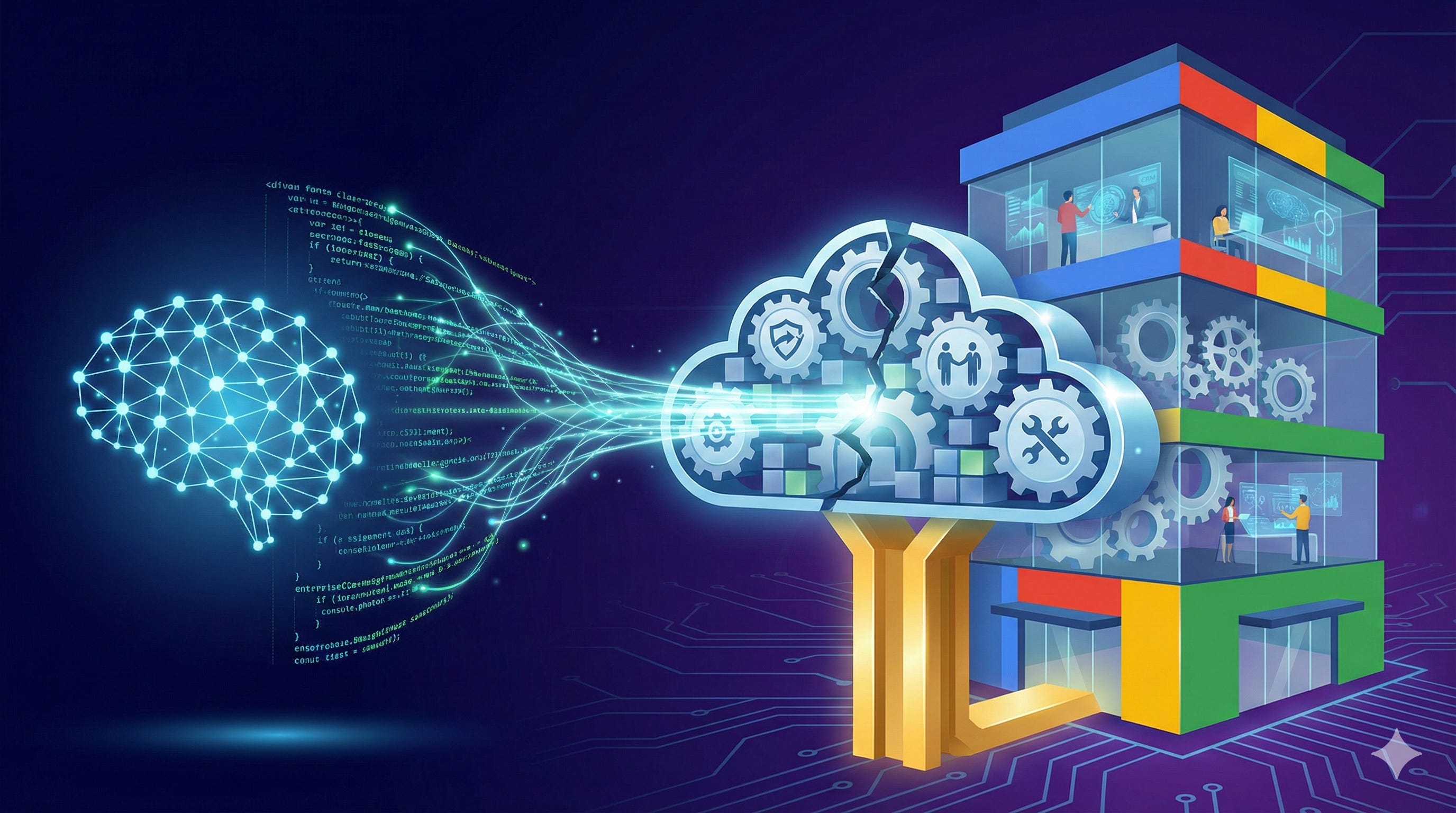
Here is a theory currently being priced into the stock market: In the very near future, large corporations will stop buying software.
The narrative goes something like this: Artificial Intelligence has become so good at writing code (”vibe coding,” in the parlance of the extremely online) that paying for expensive SaaS subscriptions is a fool’s game. Why would a Fortune 500 company pay Salesforce millions of dollars a year for a CRM when they can just ask an AI agent to “write me a system that tracks sales leads” and get a bespoke application by lunchtime? Why pay Workday to manage payroll when a Large Language Model can spin up a database and a user interface for free?
This is the “SaaSpocalypse” thesis. It suggests that the moat of the last decade -proprietary code - has evaporated. If code is free, software companies are zero.
There is only one problem with this theory: The people pricing it in have clearly never worked in an enterprise IT department.
If you have ever been involved in an enterprise software rollout, you know that “software” is a misleading term. You don’t “buy” Salesforce. You don’t “download” Workday. You enter into a multi-year, excruciatingly painful marriage. Even today, buying these products “off the shelf” is a myth. You cannot just turn them on. You have to hire a phalanx of consultants from; Deloitte, Accenture, or the software companies themselves, to come in and perform open-heart surgery on your organisation. They spend 18 months connecting the new software to your 500 other legacy systems. They map your data. They configure your security protocols. They argue about “permission sets.”
If a company cannot even implement finished, polished, supported software without spending millions of dollars on help, the idea that they will successfully build, secure, and maintain their own home-brewed AI software is, frankly, hilarious.
The Bluff at the Bargaining Table
This brings us to the actual future of software, which is not that it goes away, but that it gets used more. The question isn’t “Will we use software?” It’s “What are you going to pay for it?”
The Bear Case relies on the idea that the “vibe code” threat is a weapon. The theory is that in the next contract negotiation, the enterprise customer will lean across the table and say, “Your per-seat pricing is a ripoff. AI can write this code for free. Give us a 40% discount or we walk.”
Let’s play that scene out.
Imagine a ServiceNow sales rep walks into a negotiation with a large bank. The bank’s procurement officer puts a folder on the table. “Look,” the procurement officer says. “We love ServiceNow. But $100 a seat is yesterday’s price. I have a proposal here from a startup founded by five Stanford graduates. They have an AI agent that can vibe-code a ticketing system for us in a week. Or, hell, I have three interns in the basement who just downloaded Llama 3. They can build us a custom IT workflow tool by Friday. So, cut the price, or we hand our enterprise data and workflows to the interns.”
The ServiceNow rep doesn’t panic. They don’t offer a discount. They just ask three questions:
“When the interns go back to college in September, who maintains the code?”
“When the startup pivots to crypto-gaming next year, who migrates your data?”
“When the banking regulators ask for your SOC-2 compliance audit on the new system, are you going to send them the interns’ GitHub repo?”
The meeting ends. The bank signs the ServiceNow renewal. They probably pay 5% more than last year. The reality is that “off the shelf” SaaS provides something that bespoke AI code never can: a throat to choke. Enterprise buyers aren’t paying for code. They are paying for liability insurance.
The Google Paradox
If you need the ultimate refutation of the “Vibe Coding” thesis - the idea that companies will simply build their own software because AI makes code free - you do not need to look at a spreadsheet. You just need to look at Alphabet Inc.
Google has the greatest concentration of software engineering talent in the history of the world. They invented the Transformer model that powers the current AI revolution. They have Gemini. They have an unlimited budget. They have a culture of “Not Invented Here” that is legendary in Silicon Valley.
If any company on earth could “vibe code” its own CRM to save money, or spin up a homemade HR system over a weekend using three interns and a blindingly fast LLM, it is Google.
So, what is the software stack that runs Google?
1. They use Salesforce.
You might think CEO Sundar Pichai tracks his enterprise deals in a custom-built Google Sheet or a proprietary internal tool. He does not. Google is a massive Salesforce customer. The partnership is so deep that they have integrated Salesforce data directly into Google Workspace. Google doesn’t build its own CRM because building a CRM is easy, but maintaining a sales workflow for thousands of reps across a hundred jurisdictions is a nightmare that not even Google wants to manage.
2. They use Workday.
Google’s Human Capital Management (HCM) “backbone”- the system that handles the hiring, firing, paying, and promoting of its global workforce - is Workday. In fact, Google recently expanded this relationship, moving its Workday instances onto Google Cloud. The company that organised the world’s information decided that organising its own payroll compliance was a problem better left to a specialist.
3. They use ServiceNow.
When a Google server goes down, or an employee needs a new laptop, that ticket doesn’t go into a “Gemini IT Bot.” It goes into ServiceNow. The two companies recently deepened their partnership, integrating ServiceNow’s AI with Google’s cloud infrastructure. Google recognises that ServiceNow has spent 20 years building the specific, boring, essential workflows of IT service management that you cannot simply “prompt” into existence.
4. They use Atlassian.
While Google is famous for its internal engineering tools (like the legendary “Piper” monorepo), for project management and issue tracking across its vast cloud and business teams, it pays for Jira.
The Lesson:
This is the paradox. The company best positioned to destroy the SaaS business model is actually its biggest validator. Google pays these companies not because it can’t build the software. Google could clone Workday’s interface in a month. Google pays them because software is not just interface and code. It is maintenance. It is compliance. It is liability.
If the company with the greatest AI capability on earth refuses to “vibe code” its own internal systems, your local bank or insurance company certainly isn’t going to try.
Conclusion: The End of the Department
To believe the market’s pricing of these stocks, you have to believe in a future that goes well beyond the death of the software company. You have to believe in the death of all internal enterprise departments.
For the bear case to truly play out, we aren’t just talking about a world where Salesforce is replaced by a prompt. We are talking about a world where the internal IT department no longer exists. The market is pricing in a scenario where the CEO of a bank sets aside one hour a month to “prompt” their enterprise architecture, and then blindly trusts the AI agents to execute.
It assumes a world where executives are comfortable letting an unsupervised black box manage their regulatory compliance, their security protocols, and their payroll. If we actually get to that point - where the “human in the loop” is considered a legacy inefficiency - then enterprise erosion will be well beyond the software sector. If that is the future, you shouldn’t be worried about your Workday shares. You should be worried about your career.
Literally. Starting today.
After all, you can't sue a vibe.